
July 21, 2026
ROW vs. Private Easement: Why Placing in the Right-of-Way Can Cost Texas Utilities

When planning a water main extension or wastewater expansion, local utility boards face an immediate fork in the road:
Do you lay pipe in public Right-of-Way (ROW) alongside the road, or do you secure dedicated private easements across landowner property?
On paper, the public ROW looks like an easy win. The land is already dedicated to public use, saving you upfront negotiation time and acquisition costs. But across decades of project delivery in Texas, experienced operators know the reality:
Placing long-term utility infrastructure inside public ROW is rarely good practice.
What saves a few dollars in initial land acquisition often leads to massive capital expenses down the road.

1. The TxDOT Relocation Trap
The biggest risk of placing infrastructure inside a public road ROW—especially along Texas Department of Transportation (TxDOT) corridors—is forced relocation.
Under Texas law, if TxDOT expands a highway, adds lanes, or alters drainage, any utility line sitting within their ROW must move.
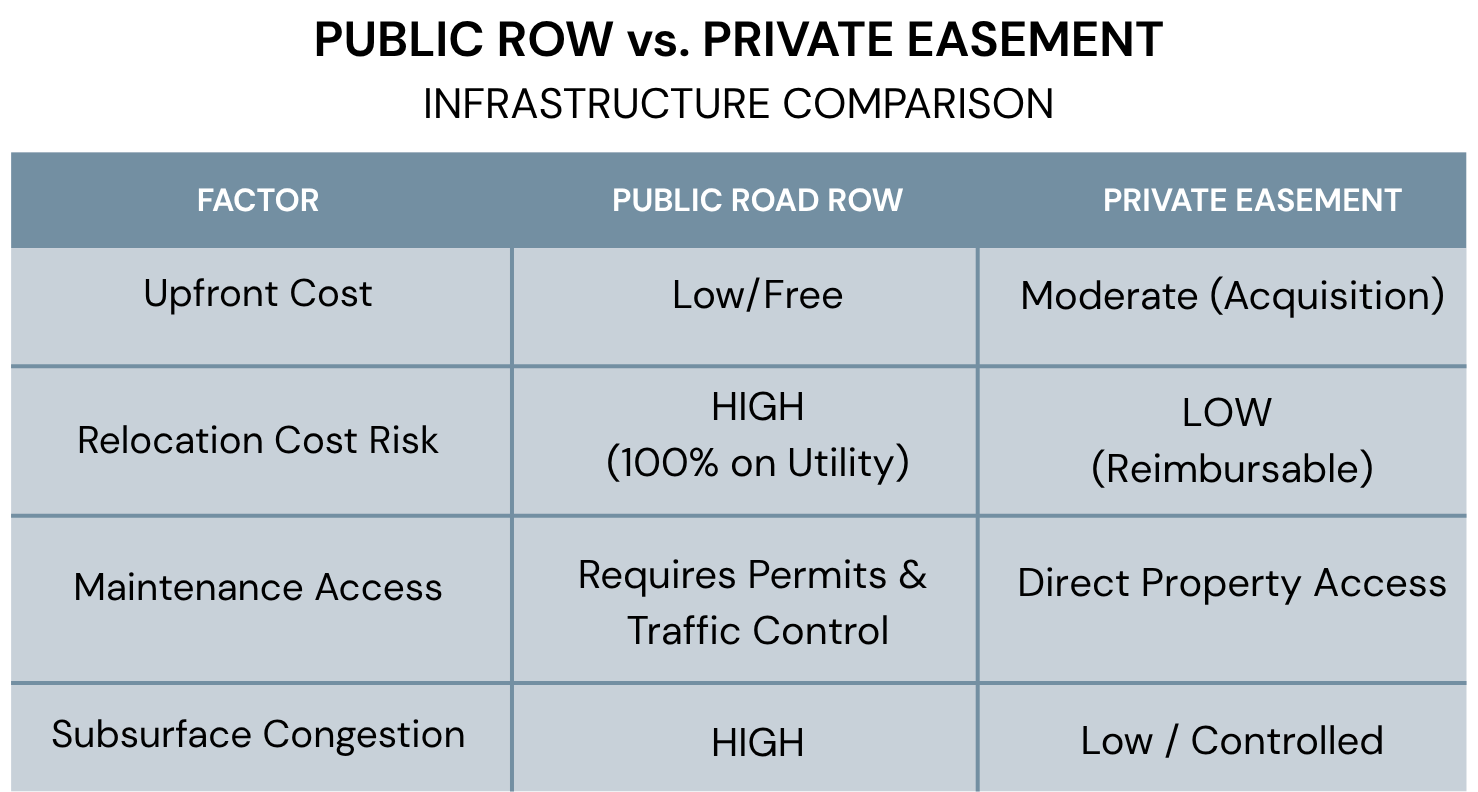
And the utility provider almost always pays 100% of the relocation costs out of pocket.
According to Texas Rural Water Association (TRWA) and USDA Rural Development project reviews, unexpected utility relocations are among the top causes of emergency debt issuance for small systems. A single road-widening project can force a Water Supply Corporation (WSC) or Special Utility District (SUD) to dig up miles of functional pipe, absorbing costs that wipe out annual capital reserves.
The Private Easement Advantage: When your pipe rests within a dedicated private easement outside the public ROW, the state or county must compensate (reimburse) your utility for the relocation costs under Texas eminent domain laws, up to and including condemning the necessary easement.
🛠️ How Can TerraServ Help?
Navigating right-of-way constraints, TxDOT permitting, and landowner negotiations doesn't have to stall your infrastructure goals. Whether you’re planning a main extension or securing state funding, TerraServ acts as an extension of your utility team.
Here is how we support Texas utility boards, WSCs, and municipal engineers:
Private Easement Acquisition: We handle end-to-end landowner outreach, title work, and easement negotiation to keep your lines out of crowded public ROWs.
TxDOT & County Alignment Strategy: When ROW placement is unavoidable, we help mitigate relocation risks and navigate complex encroachment permitting
Avoid costly utility conflicts down the road.
📞 We love to chat, call us direct at: (512) 277-5497 or reach out to us at TerraServ@TerraServTX.com
2. Overlapping Crossings & Subsurface Congestion
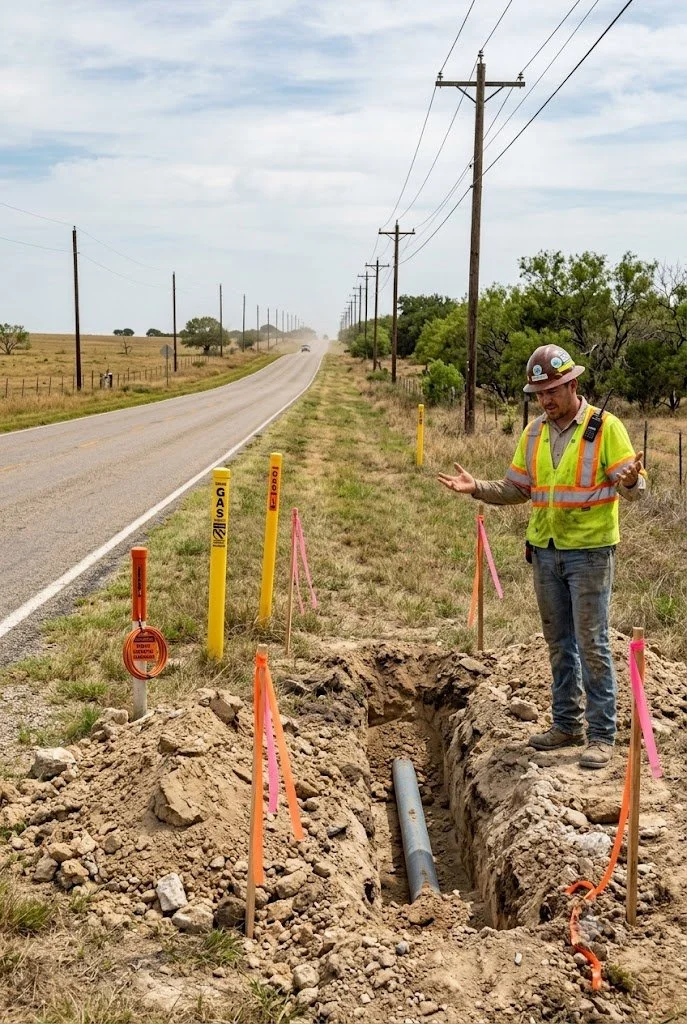
Public ROWs are crowded utility corridors. Electric co-ops, fiber optic crews, natural gas providers, and stormwater drains all squeeze into the same narrow band of dirt.
Putting your water or sewer main in that mix creates immediate engineering and operational headaches:
Utility Interference: A contractor installing fiber optic cables can easily strike or expose your lines.
Separation Rules: Texas Commission on Environmental Quality (TCEQ) rules require strict 9-foot horizontal separation between potable water lines and sanitary sewers. In a congested ROW, meeting these clearances can force expensive engineered encasements.
Difficult Locates: Overlapping infrastructure makes standard line tracing difficult, increasing the risk of accidental strikes during routine excavation.
3. The Endless Permitting Grind
Need to repair a main break, tap a new meter, or upgrade a valve?
If your pipe is in a private easement, your crew digs a hole, fixes the line, and restores the ground.
If your pipe is in TxDOT or county ROW, simple maintenance becomes an administrative chore:
Traffic Control Plans (TCP): You must submit lane closure plans and pay for certified traffic control crews.
Encroachment Permits: Every repair or tie-in requires formal permit approvals before equipment touches the dirt.
Repair Delays: Waiting on permit turnaround times during standard maintenance can leave customers without service longer than necessary.
The Bottom Line for Utility Boards & Engineers
While private easements require upfront land rights coordination, appraisal work, and landowner negotiations, they act as an insurance policy for your capital infrastructure. Funding entities like the Texas Water Development Board (TWDB) and USDA Rural Development look favorably on projects with secured, clear private title because it minimizes long-term operational risks.
Build Infrastructure That Lasts with TerraServ
Don't let short-term ROW savings compromise your utility’s long-term financial stability. Whether you are navigating complex landowner negotiations, securing private easements, or preparing ROW packages for TWDB or USDA grant funding, TerraServ delivers the land rights expertise you need.
Ready to protect your system's future?